

Homebuyers today look beyond just apartments and floor plans. In a growing city like Pune, families want daily convenience, safety, access to services, and a sense of belonging. This is why social infrastructure has become one of the most important factors when choosing a residential township in Pune.
As the Pune Metropolitan Region continues to expand in 2026, housing demand is increasingly shifting toward large, master-planned developments. According to recent 2025 industry reports, mixed-use township projects in Pune have shown stronger buyer preference compared to standalone residential buildings. The reason is practical living. People want essential services closer to home.
Why Social Infrastructure Matters in Pune’s Growth
Social infrastructure includes the systems and facilities that support everyday life. This means access to education, healthcare, retail, employment hubs, public spaces, and mobility networks. When these elements are planned together within a township, residents experience better convenience and reduced travel time.
Pune’s growth has been supported by IT expansion, industrial development, and infrastructure improvements such as new road corridors and metro connectivity. With increasing migration into the city, families prefer a residential township that offers organized planning instead of scattered development.
Strong social infrastructure in Pune helps residents:
- Reduce daily commute time
- Access schools and healthcare easily
- Meet daily shopping needs within the township
- Engage in community activities
- Enjoy organized public spaces
These factors directly influence quality of life.
Key Elements That Build Strong Social Infrastructure
A township with strong social infrastructure is built around multiple supporting systems. These include:
1. Educational Institutions
Access to schools within or near the township creates convenience for families with children. It reduces travel stress and ensures continuity in education. Townships that include school infrastructure attract long-term residents.
2. Healthcare Facilities
Availability of clinics and hospitals nearby increases residential confidence. Quick access to medical services is an essential part of community planning.
3. Retail and Daily Convenience
Grocery stores, pharmacies, cafes, and essential service outlets inside the township reduce dependence on distant markets. Retail and commercial spaces in township developments make daily living smoother.
4. Commercial and Workspaces
Mixed-use development in Pune often includes office and business spaces. This allows residents to work closer to home and supports a live-work lifestyle.
5. Parks and Community Spaces
Open spaces, sports courts, walking tracks, and gathering areas help build social interaction. These areas support physical health and strengthen neighborhood bonds.
6. Planned Mobility and Roads
Internal road networks, pedestrian paths, and structured planning improve accessibility. Organized mobility is a key part of long-term township success.
When all these systems function together, the township begins to operate as a self-sustained township in Pune.
How Community Ecosystems Are Built
Strong social infrastructure does not happen by chance. It is the result of master planning and phased development. Large-scale developments consider how the population will grow over time and how infrastructure will support that growth.
Effective township planning includes:
- Balanced residential and commercial zones
- Gradual expansion of infrastructure
- Long-term maintenance systems
- Organized retail growth
- Community gathering areas
Unlike isolated housing projects, integrated township developments are designed with future expansion in mind. This long-term vision supports stable occupancy and sustained value.
Pride World City – A World Within a City
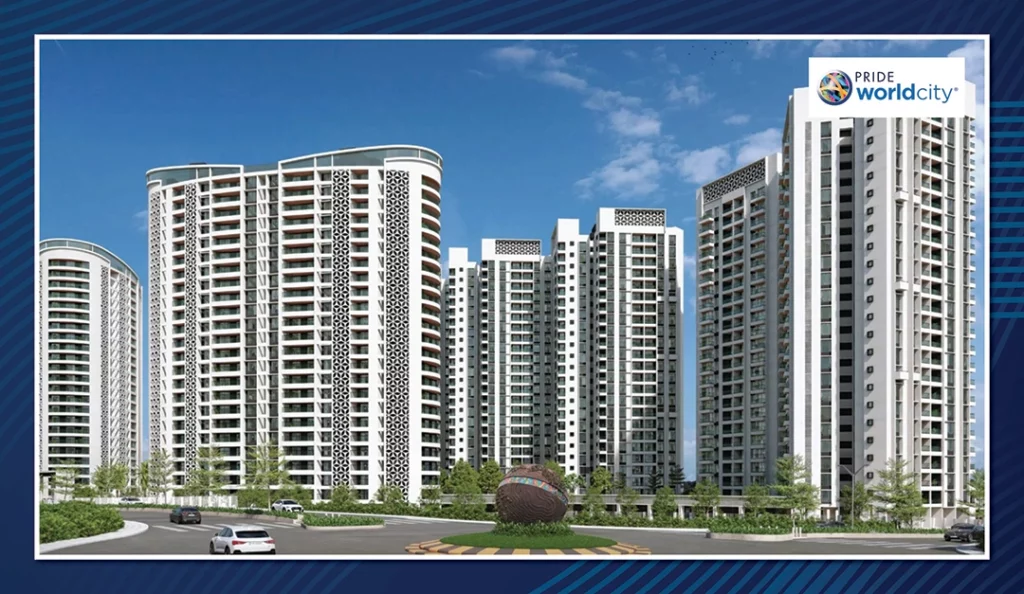
Spread across approximately 400 acres, Pride World City is planned as a comprehensive urban ecosystem rather than just a housing cluster.
Over 5 million square feet has already been completed, with additional development under construction. More than 9,000 families are already part of this growing community, reflecting active and functioning social infrastructure.
Education Within the Township
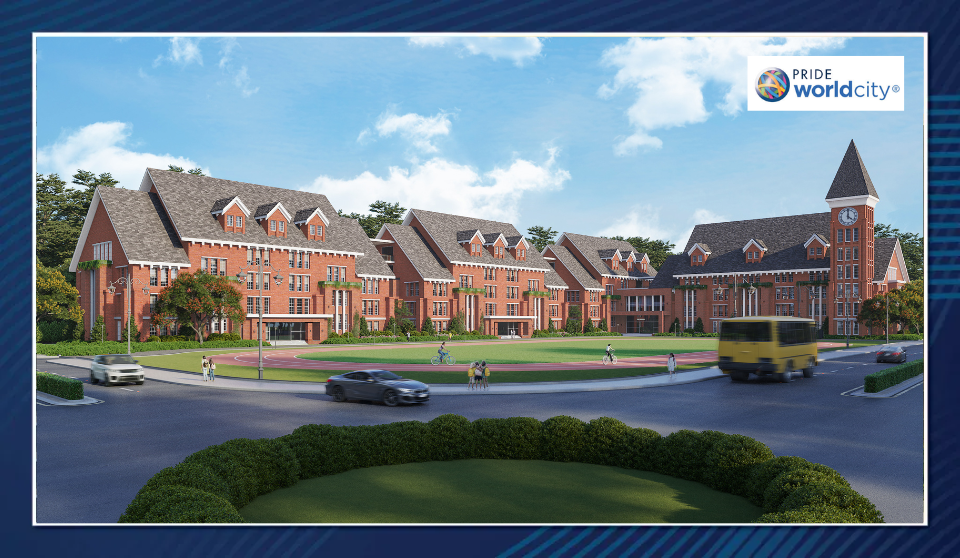
Learning academies, play schools, and daycare centers support young families living inside the township. A planned full-scale school further strengthens the internal education framework, making the development suitable for long-term family living.
Healthcare and Essential Services
A multispecialty hospital is planned within the township, reinforcing healthcare accessibility for residents.
Essential services such as banks, BRTS transport connectivity, and planned civic infrastructure including a fire station add to daily convenience and safety.
Retail, Business and Commercial Integration
Town plazas and organized retail streets serve everyday needs within the township. Commercial zones support business activity and employment within the same ecosystem.
Upcoming infrastructure includes:
- Mall and multiplex
- Business and tech park
- IT building
- Fuel station
- Fire station
These additions reflect long-term infrastructure planning aligned with township growth.
Club Charholi: Community and Lifestyle Hub
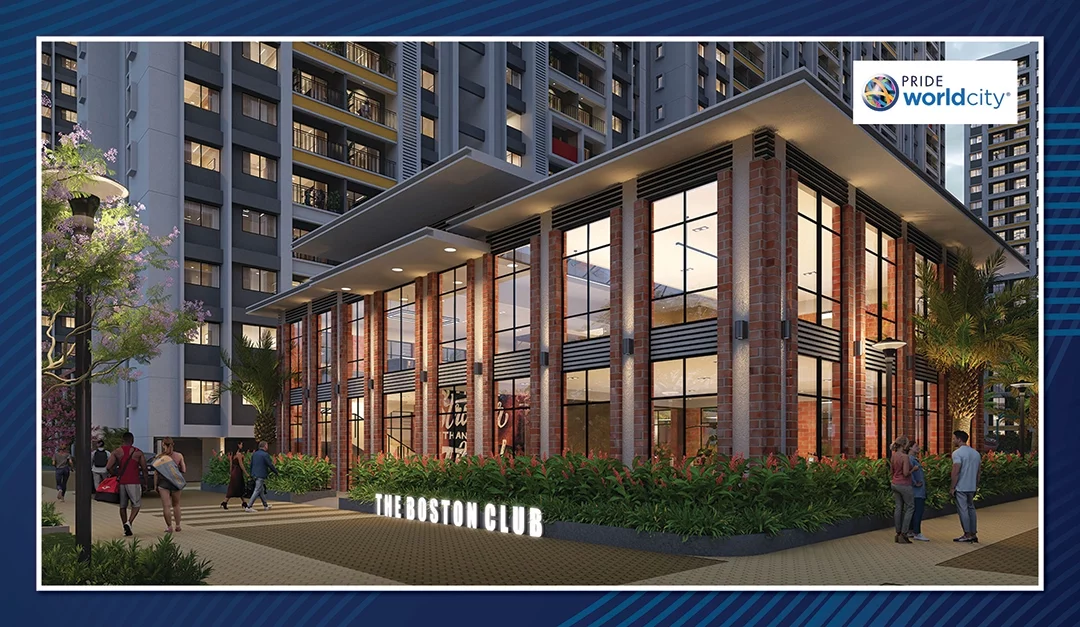
Club Charholi strengthens the township’s social infrastructure by providing a dedicated space for recreation, wellness, business interaction, and social engagement.
It includes:
Fitness and Wellness Facilities
- Modern gym
- Multi-activity studio
- Swimming pool
- Nutrition support
Sports Infrastructure
- Badminton courts
- Squash courts
- Tennis courts
- Cricket pitches
- Pickleball courts
- Dance and music studios
Recreation and Social Spaces
- Restaurant and café
- Lounge and bar
- Banquet hall
- Outdoor party lawn
- Kids play areas
Learning academies in sports and performing arts further expand engagement opportunities within the township.
Club Charholi enables residents to work, exercise, celebrate, and socialize without leaving the development. This layered infrastructure reinforces the concept of Pride World City as a self-sustained urban environment.
How Social Infrastructure Influences Long-Term Value
Recent 2025 property studies indicate that developments with integrated retail, schools, and healthcare tend to show stronger occupancy stability. Buyers increasingly evaluate not only the home but also the surrounding ecosystem.
They look at:
- Distance to essential services
- Access to employment hubs
- Availability of community spaces
- Ease of internal mobility
Townships that address these factors often provide long-term satisfaction for residents. Strong social infrastructure supports both lifestyle and investment stability.
Conclusion
As Pune continues to expand, the focus has shifted from standalone housing to organized community ecosystems. Buyers looking for an integrated township in Pune now prioritize social infrastructure as much as the home itself.
Developments that combine residential planning with schools, healthcare, retail, commercial zones, and public spaces are shaping the future of community living in Pune. Strong social infrastructure remains central to sustainable urban growth and long-term livability.
Frequently Asked Questions
What does strong social infrastructure include in a township?
It includes schools, healthcare facilities, retail outlets, commercial spaces, parks, and well-planned mobility systems that support everyday living within the township.
Why do families prefer townships with schools and retail inside?
Because they reduce travel time and improve daily convenience. Having essential services nearby supports long-term comfort and stability.
How does social infrastructure impact property value?
Access to education, healthcare, and retail increases buyer demand and occupancy stability. This contributes to consistent long-term value.
Are townships near Pune becoming self-sustained communities?
Yes. Many large-scale projects now combine residential, commercial, and social infrastructure within one master plan to support complete community living.